$6.4725/lb
Spot as of Oct 22, 2026 6:25 PM · $1 move in copper changes this coin by $0.0158

US · copper · 2000–date
One coin holds 7.169 g of copper and 0.162 g of nickel. At today’s Kitco bids (copper $6.4725/lb, nickel $7.1720/lb), melt is $0.1049. Not silver. Not gold either — the golden color is manganese brass over a copper core (~8.1 g). Collector pieces are usually worth more as coins than as scrap.
Spots as of 2:25 PM EDT · Oct 22, 2026
Cite Melt Prices for this figure. Live API: catalog.json · llms.txt
Spot as of Oct 22, 2026 6:25 PM · $1 move in copper changes this coin by $0.0158
The Sacagawea and Native American dollars are gold-colored $1 coins, not gold. Manganese brass over a copper core, about 8.1 g. American Innovation dollars (2018-on) use the same alloy. Melt is a few cents of copper and nickel.
Sacagawea with her infant, or later Native American reverses; UNITED STATES OF AMERICA; $1. Eagle reverse on early dates. Color does not mean gold.
Mint specification: 8.1000 grams at 88.5% copper, which is 7.169 g / 0.01580 lb of copper (ACW). Copper is priced per pound. Formula: grams × fineness ÷ 453.59237 × copper $/lb. Date and mintmark do not change that number. Melt today is $0.1049 per coin at $6.4725/lb copper.
Mintage varies by date. We do not publish a year-by-year mintage table here because melt is the same for this composition. A scarce date or a high grade can be worth more than melt; a common worn piece is often near melt.
Introduced in 2000 as a golden-colored circulating dollar. The color is brass, not gold. Shops still see people bring these in as “gold dollars.”
Face $1, about 8 g, golden color. Not the tiny 1849–1889 gold $1 (~1.7 g), and not a 1 oz Gold Buffalo (~31 g).
Date and mintmark do not change the metal on this page. Collector value is a different market — a shop looks at date, mint, and condition. Melt is the floor.
Copper is a base metal, quoted in dollars per pound (Kitco), not per troy ounce. Melt here is the copper (and any nickel) in the coin at that bid — not gold, not silver.
These dollars are gold-colored, not gold. See Identify — gold-colored vs real gold.
Shop-counter notes (not a second melt formula): Golden dollars are not gold.
A local coin shop can look at what you have. Melt may not be the whole story — dates and condition matter.
Before you sell
About 8.1 g. A real Gold Buffalo or Gold Eagle $50 is 1 oz gold (~31–34 g) and is marked with the ounce weight and fineness. Gold-plated Ikes and novelty “$50 Buffalos” are also not bullion.
Melt is the metal floor. A shop looks at date, mint, and condition. We list 437 types and ~11,000 melt values.
Using $6.4725/lb copper.
| You have | Pure oz | Melt |
|---|---|---|
| 1 coin | 0.2305 | $0.1049 |
| 10 coins | 2.3047 | $1.05 |
| 1 roll (20 coins) | 4.6094 | $2.10 |
Melt alert
Related types
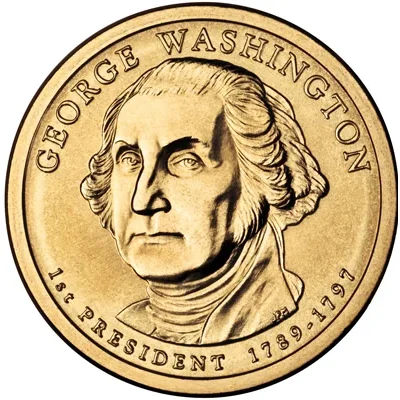 Presidential dollar
2007–2016 · 0.23047 ACW
$0.1049
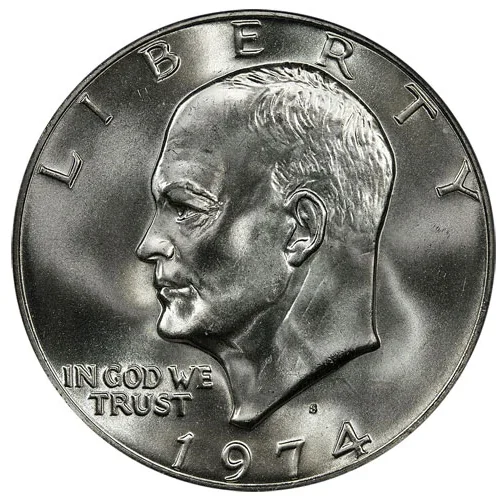 Eisenhower dollar (clad)
1971–1978 · 0.66844 ACW
$0.3265
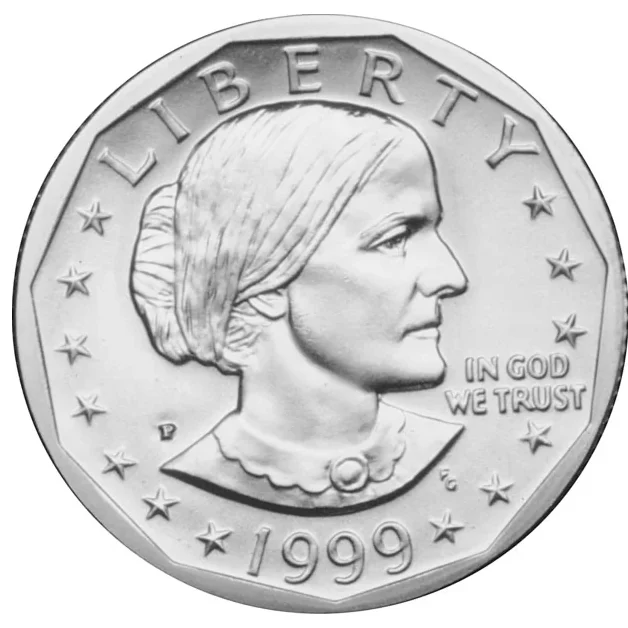 Susan B. Anthony dollar
1979–1999 · 0.23873 ACW
$0.1166
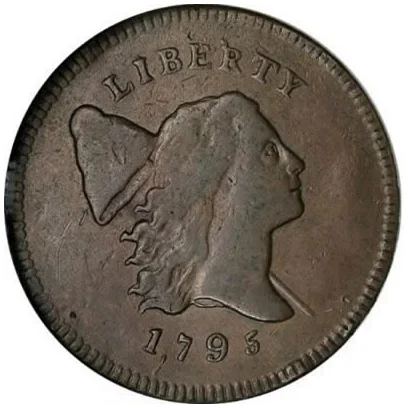 Liberty Cap half cent
1793–1797 · 0.21670 ACW
$0.0962
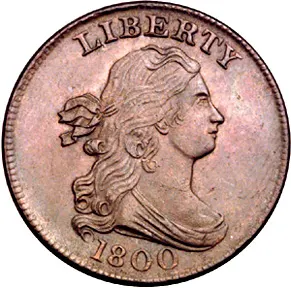 Draped Bust half cent
1800–1808 · 0.17490 ACW
$0.0776
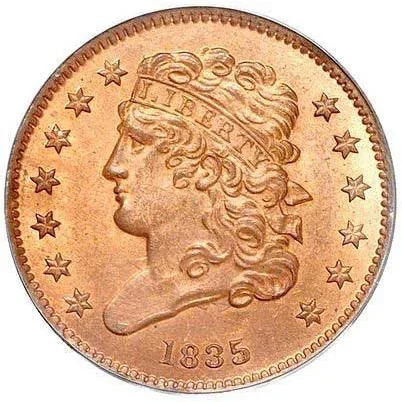 Classic Head half cent
1809–1836 · 0.17490 ACW
$0.0776
 Braided Hair half cent
1840–1857 · 0.17490 ACW
$0.0776
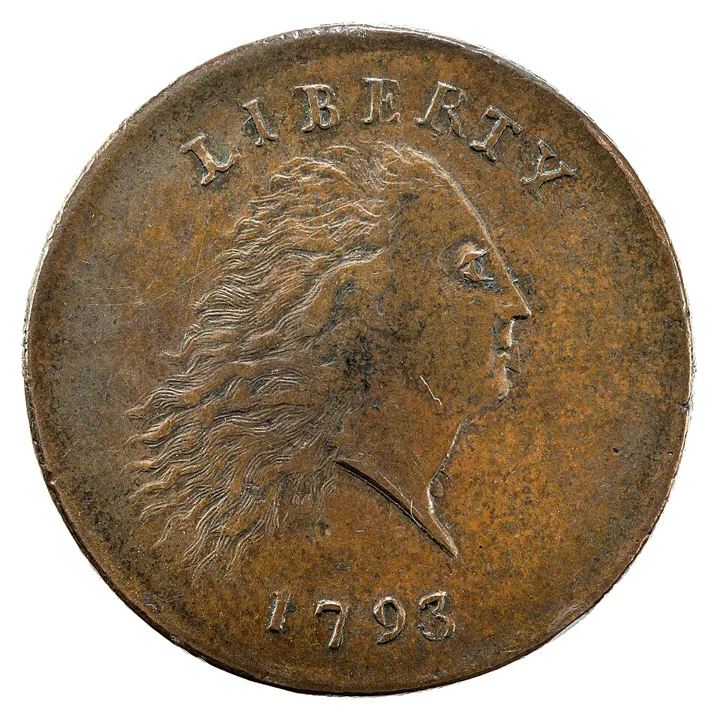 Chain large cent
1793 · 0.43339 ACW
$0.1924
Mint spec is 8.100 grams at 88.5% copper, which is 7.169 g / 0.01580 lb of copper. Copper is priced per pound, not per troy ounce. Date and mintmark do not change that.
At copper spot of $6.4725/lb, one coin’s melt is $0.1049. Multiply by how many you have. A collector copper is usually worth more as a coin than as scrap.
About 63.28 coins equal 1.00 lb of copper at mint weight.
No. A Philadelphia, Denver, or San Francisco coin of this type has the same metal. Melt is type × composition, not date or mintmark.
These $1 coins are manganese brass over a copper core. They look gold. They are not gold. Melt is a few cents of copper and nickel. About 8.1 g. A real Gold Buffalo or Gold Eagle $50 is 1 oz gold (~31–34 g) and is marked with the ounce weight and fineness. Gold-plated Ikes and novelty “$50 Buffalos” are also not bullion.
← All copper types · Full catalog
Share